The page-by-page guide to reading any sectional chart for the Part 107 test

How to study airspace, METARs and weight & balance without memorizing random codes or watching hours of disorganized video 57 illustrated pages.

PDF study guide for drone pilots · 57 topics drawn and labeled

BUY NOW

🔒 Secure checkout · PDF by email · 30-day guarantee

57drawn and labeled pages
7parts, from rules to test day
2bonus books included
PDFby email, printable

This Is What the Pages You Will Study Look Like

Designed to read on your phone screen while you study at the kitchen table after work.

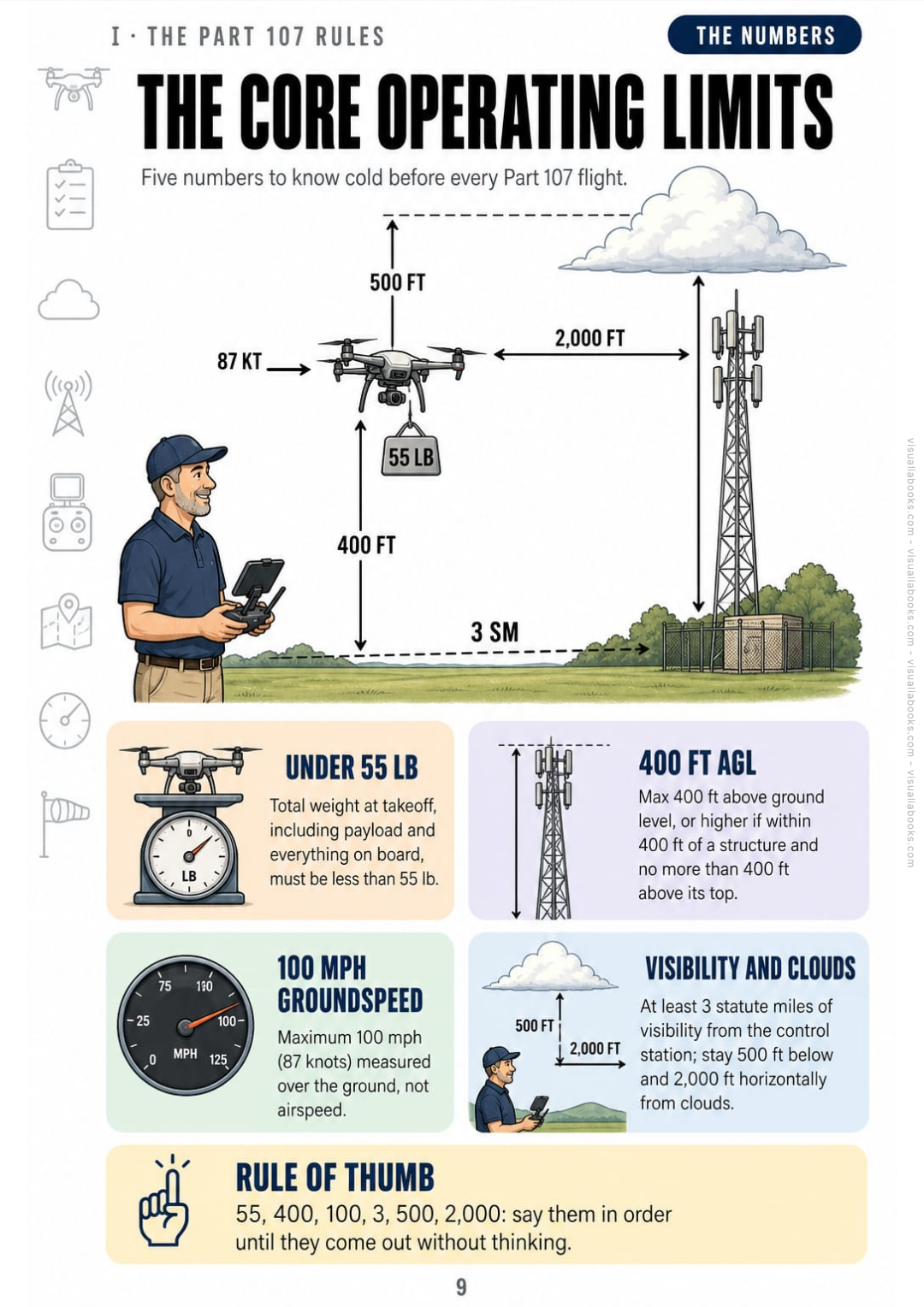
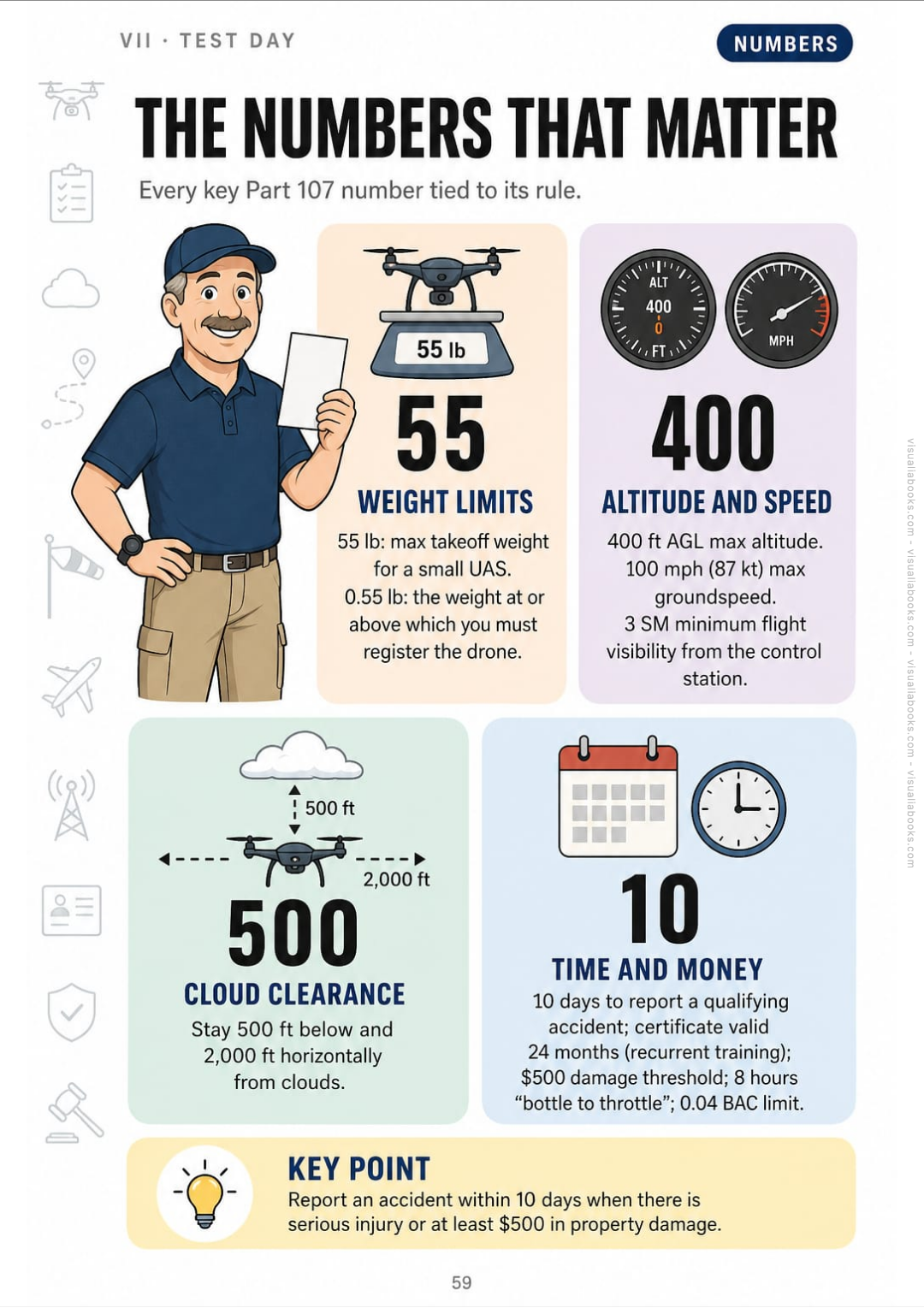
Under 55 lb, 400 ft AGL, 100 mph, 3 SM visibility, 500 ft below and 2,000 ft from clouds.
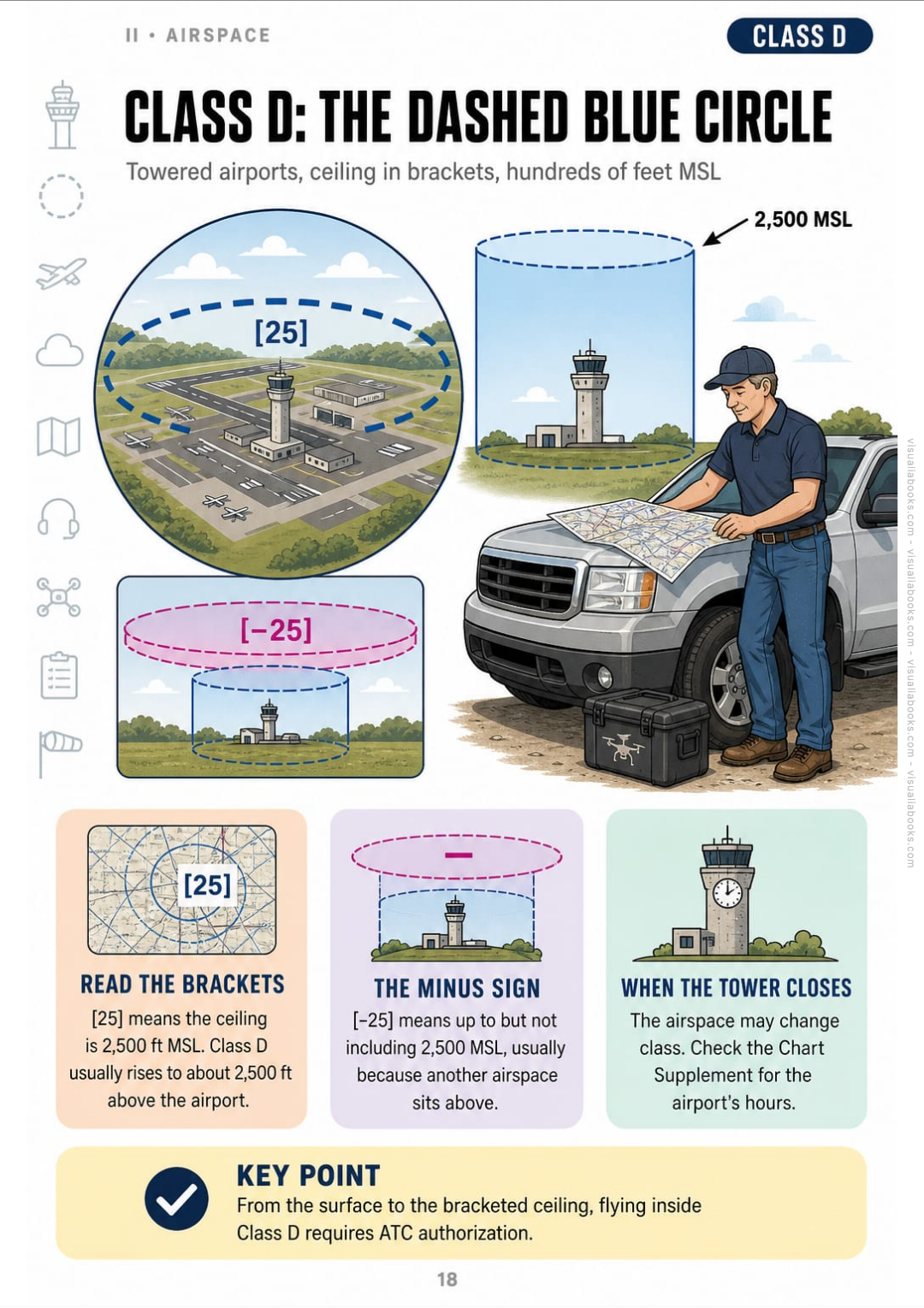
Class D: dashed blue, [25] = ceiling 2,500 ft MSL; authorization required.
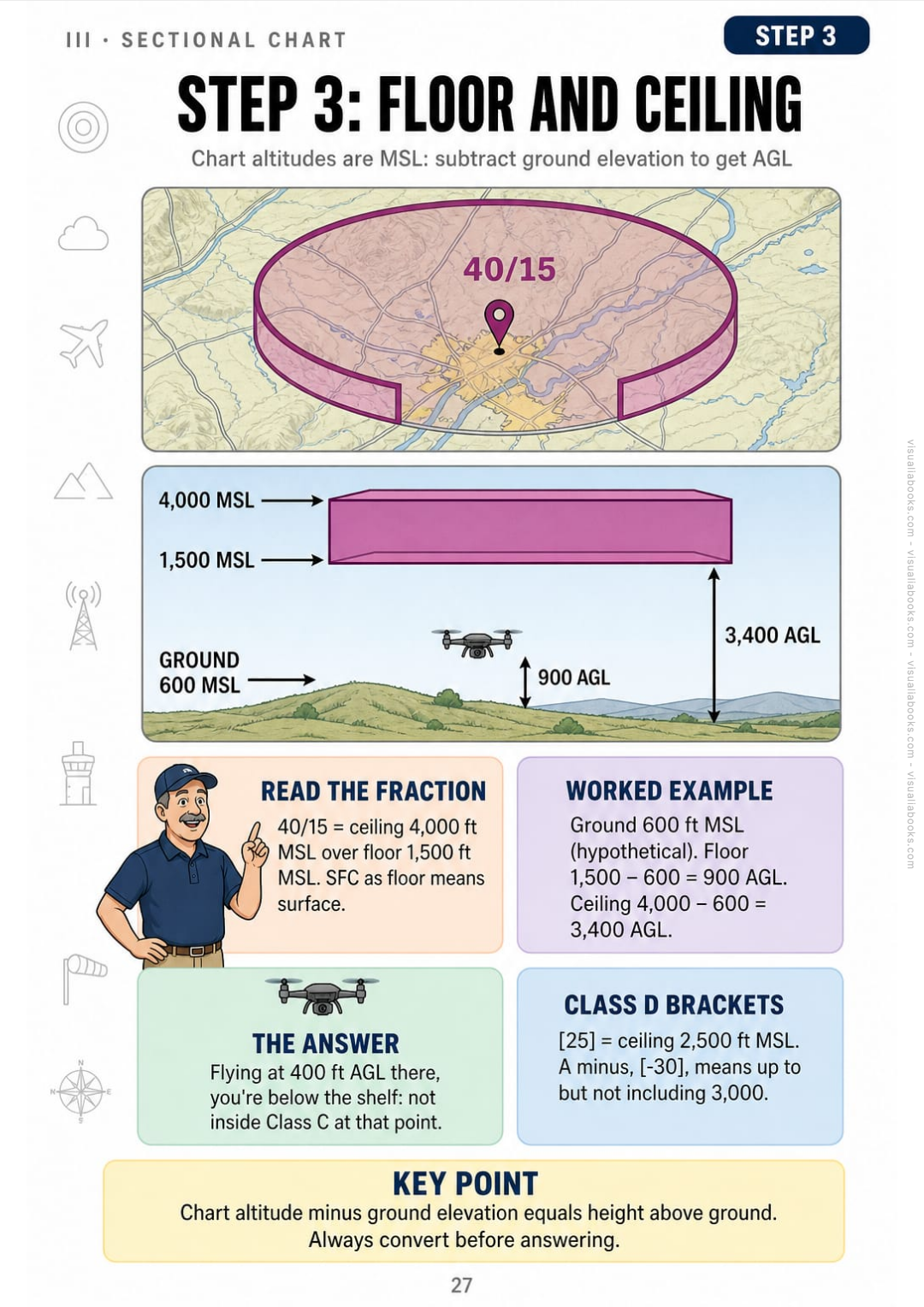
Class C shelf 40/15 over 600 ft terrain: floor 900 ft AGL, ceiling 3,400 ft AGL.
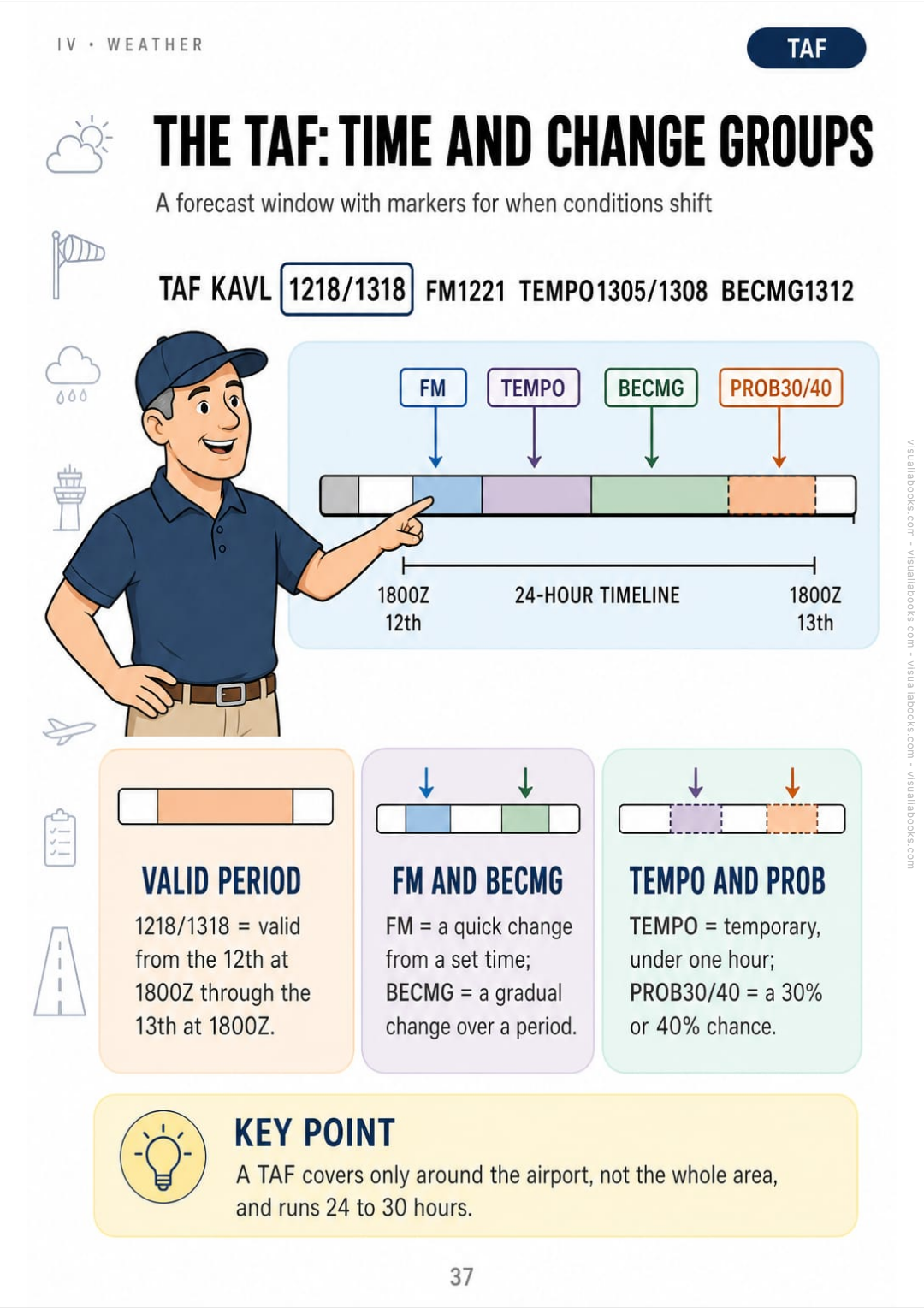
1218/1318 and the change groups on one timeline
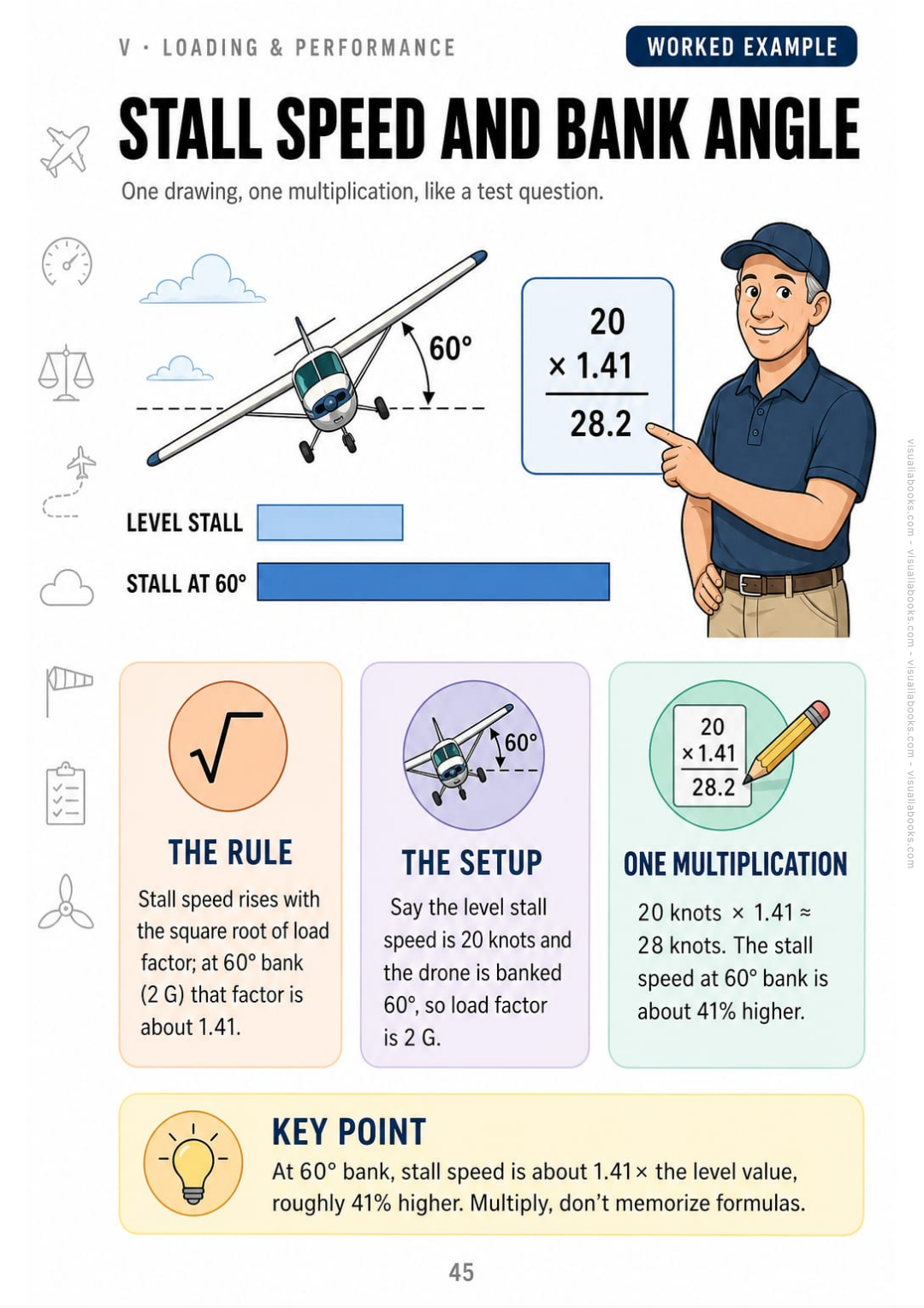
20 kt level stall x 1.41 at 60 bank = 28 kt: one drawing, one multiplication.
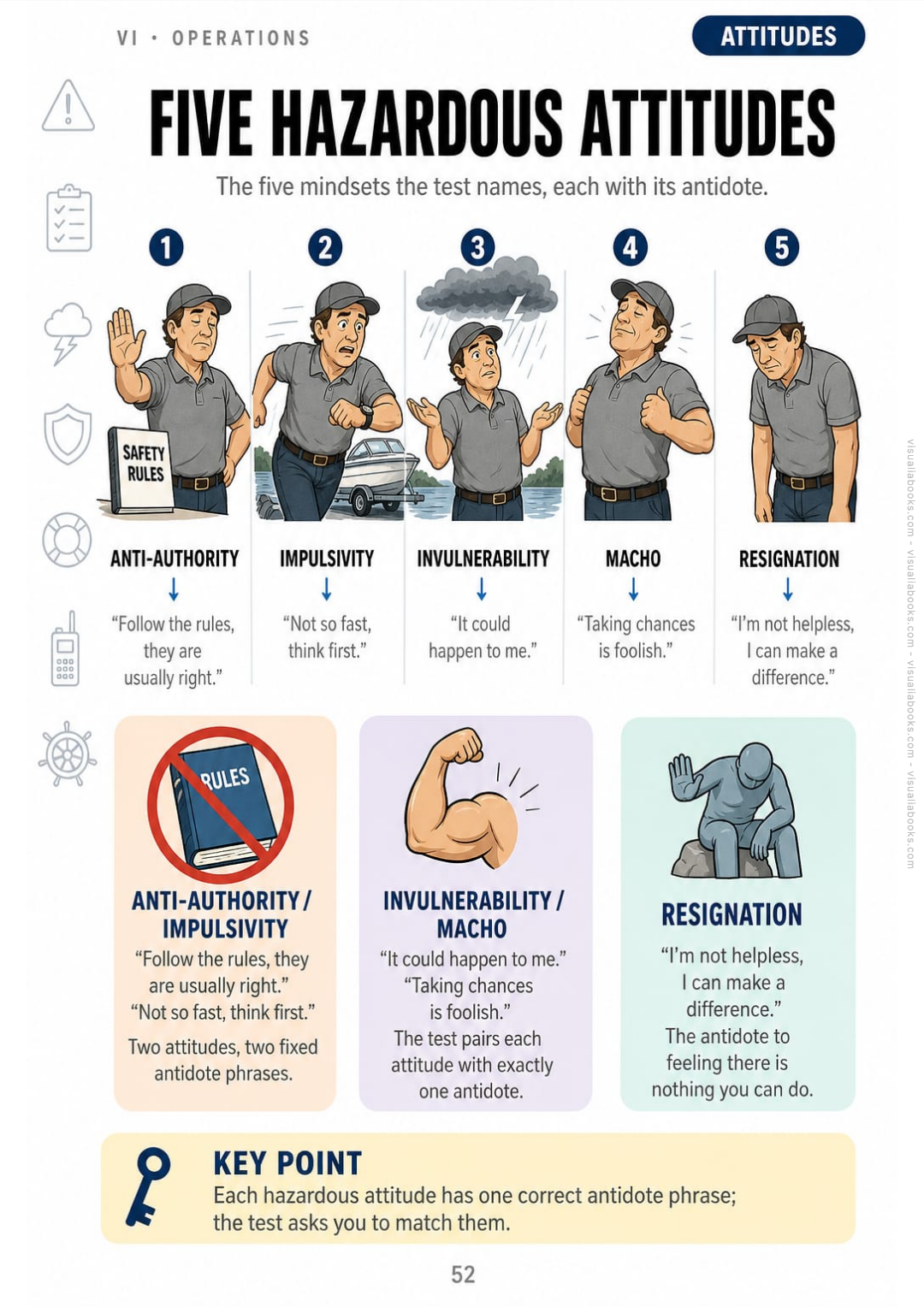
Five hazardous attitudes drawn as scenes, each with its one antidote phrase.
55 lb, 400 ft, 100 mph, 3 SM, 500/2,000 ft, 10 days, 24 months — each with its rule.

Swipe to see more · tap to zoom →

These are real pages from the book. The table of contents is the full one: 7 parts and 27 topics.

It's not your memory. Sectional charts just get taught with no reading order.

You open the FAA testing supplement and the chart looks like spaghetti. Magenta lines, dashed blue circles, numbers stacked on top of each other, and nobody told you which to read first.

You watch three YouTube videos and get three different explanations. One says start with the airport. Another says start with the airspace. None give you a fixed order you can repeat every time.

The METAR reads like a string of random letters. You decode half of it tonight and forget the rest by tomorrow morning.

Class C shelf 40/15 over 600 ft terrain: floor 900 ft AGL, ceiling 3,400 ft AGL.

This page shows a Class C shelf with 40/15 printed on the chart. Floor is 1,500 ft MSL. Ceiling is 4,000 ft MSL. The terrain is drawn underneath so you see AGL and MSL side by side, in one picture.

Same chart excerpt, same numbers. But now you read them in the same two steps, every time.

That's what changes when every concept gets its own page and drawing.

Jobs you can't take

Without the Part 107 certificate, every paid drone flight is illegal. Roof inspections, real estate aerials, mapping — the work is there, but you can't charge for it until you pass.

Hours with no structure

You watch videos, read forums, open the FAA study guide and close it. Months of studying in circles, and the sectional chart still doesn't click.

Stress on test day

You sit down at the testing center. A supplement figure loads on the screen. You see stacked numbers with no reading order. The timer counts down and your mind goes blank.

BUY NOW

🔒 Secure checkout · PDF by email · 30-day guarantee

SEE THE DIFFERENCE

The same topic studied two ways

THIS
  • Read a paragraph of coded abbreviations and try to memorize the TAF format
  • Look up each change group — FM, TEMPO, BECMG, PROB — in a separate table
  • Hope you remember the time-group structure when the test question loads
A Terminal Aerodrome Forecast (TAF) is issued in a coded format starting with the four-letter ICAO station identifier, followed by the issuance date and time in Zulu and a valid period expressed as two date-hour pairs (e.g., 1218/1318 means from the 12th at 1800Z through the 13th at 1800Z). The forecast body contains change groups introduced by FM (from), TEMPO (temporary fluctuations), BECMG (becoming) or PROB (probability, typically PROB30 or PROB40), each with its own date-hour range and revised conditions: wind, visibility, weather phenomena and sky cover expressed in standard coded abbreviations.
FOR THIS
  • See the entire TAF laid out on a timeline with each block color-coded
  • Read every change group left to right, in order, on one drawing
  • Open the page during review and follow the same steps every time
1218/1318 and the change groups on one timeline
CONTENTS

Take a Look at the 7 Parts and 27 Topics

From Part 107 rules and airspace to sectional charts, weather, loading and test-day strategy — each concept drawn on its own page, in the order you need it.

IThe Part 107 Rules · pp. 5-13
  1. Who needs Part 107 and who follows recreational rules
  2. The six steps to the Remote Pilot Certificate
  3. Remote ID: three ways to comply, drawn
  4. The five core limits: 55 lb, 400 ft, 100 mph, 3 SM, 500/2,000 ft
  5. Night operations, over people and when you need a waiver
IIAirspace, Drawn · pp. 14-21
  1. Every airspace class in one side view: B, C, D, E and G
  2. MSL vs. AGL: convert chart altitudes with one subtraction
  3. Class B, C, D and E read from the chart and what each one needs
  4. LAANC or DroneZone authorization before takeoff
IIIReading the Sectional Chart · pp. 22-31
  1. A five-step reading order you repeat on every chart excerpt
  2. Locate any point with latitude and longitude ticks
  3. Airport symbols, data blocks and the floor-and-ceiling fraction
  4. Obstructions, TFRs and the Chart Supplement
IVWeather: METAR, TAF and Why It Happens · pp. 32-41
  1. METAR decoded left to right: wind, visibility, sky, temperature
  2. TAF change groups on a single color-coded timeline
  3. Density altitude and why the drone performs differently
  4. Fog, thunderstorms and fronts in one drawing each
VLoading and Performance · pp. 42-47
  1. Center of gravity drawn, not just calculated
  2. Load factor and stall speed at 60-degree bank: one multiplication
  3. Batteries, preflight and the 55 lb limit
VIOperations and Decisions · pp. 48-55
  1. Right of way, traffic patterns and radio phrases
  2. PAVE, DECIDE and the five hazardous attitudes with antidotes
  3. Crew resource management and fitness to fly
VIITest Day and Final Review · pp. 56-61
  1. How the knowledge test works at the testing center
  2. Working a supplement figure step by step
  3. The most frequent mix-ups, side by side
  4. Every number for the test on one review page

Every concept gets a full page and its own drawing

Every concept gets a full page. The drawing is the explanation — not decoration. You see the idea, read the label and move on.

20 kt level stall x 1.41 at 60 bank = 28 kt: one drawing, one multiplication.

This page shows stall speed at 60° bank. Level stall is 20 kt. Multiply by 1.41. In the turn, stall speed jumps to about 28 kt. One drawing, one multiplication.

No table to memorize. The link between bank angle and stall speed is right there in the picture.

What you see drawn, you don't need to memorize.

BUY NOW

🔒 Secure checkout · PDF by email · 30-day guarantee
Here Is What You Get with Part 107, Page by Page:

Ipp. 5-13

The Part 107 Rules

Who needs Part 107, how to get the certificate, Remote ID, night operations, over people and the core operating limits.

IIpp. 14-21

Airspace, Drawn

All six airspace classes drawn as layers: B, C, D, E and G, with MSL vs. AGL and how to get LAANC authorization.

IIIpp. 22-31

Reading the Sectional Chart

The five-step reading order for any sectional chart: locate, airport symbols, floor and ceiling, obstacles, frequencies.

IVpp. 32-41

Weather: METAR, TAF and Why It Happens

METAR and TAF decoded left to right, plus density altitude, clouds, fog, thunderstorms and fronts.

Vpp. 42-47

Loading and Performance

Center of gravity, load factor, stall speed, bank angle, battery care and performance — all drawn.

VIpp. 48-55

Operations and Decisions

Right of way, traffic patterns, radio basics, decision-making models (PAVE, DECIDE), hazardous attitudes and fitness to fly.

VIIpp. 56-61

Test Day and Final Review

How the knowledge test works, working supplement figures, the most frequent mix-ups and a final review sheet.

And That Is Not All: 2 More Books, Free

Part 107 Practice Question Book

BONUS 1: «Part 107 Practice Question Book»

Value on its own: US$ 22.90

Practice with chart-based questions in the style of the FAA knowledge test, each one with a drawn explanation of the answer.

Part 107 Common Mistakes & Quick Cards

BONUS 2: «Part 107 Common Mistakes & Quick Cards»

Value on its own: US$ 18.90

The most frequent mix-ups on the Part 107 topics, side by side, plus one-glance cards you can print for your final review.

Part 107, Page by Page + 2 Free Books

  • Part 107, Page by Page: 57 illustrated pagesUS$ 67.90
  • BONUS 1: Part 107 Practice Question BookUS$ 22.90
  • BONUS 2: Part 107 Common Mistakes & Quick CardsUS$ 18.90
  • High-resolution PDF to printIncluded
Total value US$ 109.70
YOUR PRICE:
US$ 27
You save US$ 82.70
BUY NOW

📄 This is a digital PDF book sent to your email: nothing is printed or shipped.

Secure purchaseEncrypted payment30-day guarantee

PDF by email: Part 107, Page by Page reaches your inbox as a PDF, and the two free books come by email too. One-time payment, no installments or hidden costs.

Is this for you?

You inspect roofs or job sites with a drone

You inspect roofs or job sites with a drone

You already fly. You need the Part 107 certificate to charge for the work. You study at night after the job and need a method that sticks.

You shoot real estate or events and want aerial photos

You shoot real estate or events and want aerial photos

Your clients ask for drone shots. Flying is the easy part — you need to know airspace and weather rules to do it legally.

You fly for fun and want to turn it into paid work

You fly for fun and want to turn it into paid work

You've been flying as a hobby. The Part 107 test is the next step, but charts and METARs look like a foreign language.

To Sum Up: Here Is What You Get

US$ 109.70US$ 27
BUY NOW

📄 This is a digital PDF book sent to your email: nothing is printed or shipped.

30DAYS
GUARANTEE

30-Day Guarantee

30-day guarantee: tell us what didn't work and we'll refund 100%.

100% Money-Back Guarantee for 30 days. Use it with your real study sessions. If it doesn't help you read charts or decode weather, tell us what didn't work and we'll refund every cent.

Frequently Asked Questions

Is this a physical book or digital?

It's a digital PDF. You receive it by email and you can print it to study with the chart next to you.

Can I read it on my phone?

Yes. Every page is sized to read on a phone or tablet screen.

Does it work if I've never seen a sectional chart before?

Yes. The book starts from Part 107 rules and builds up. No aviation background needed.

How do I receive the material?

PDF by email. You get the book and the two bonus books in PDF format.

Is this a one-time payment?

Yes. One payment, no subscription, no recurring charges.

Is this an official FAA publication?

No. It's illustrated study material checked against the FAA Remote Pilot Study Guide, the Airman Certification Standards and 14 CFR Part 107. It is not published or endorsed by the FAA.

Does this replace ground school or flight training?

No. It's a visual study companion for the knowledge test. It does not replace any FAA-required training or certification process.

Is it up to date with current Part 107 rules?

It covers night operations, operations over people and Remote ID as reflected in the current FAA study materials.

One Last Thing Before You Decide...

No more staring at the chart wondering where to start.

No more re-watching the same video hoping it clicks this time.

Open the page, follow the steps, and know what you're looking at.

The chart is already talking to you. This book shows you how to read it.

One-time payment: US$ 27 · Guarantee: 30 days · PDF by email

BUY NOW

📄 This is a digital PDF book sent to your email: nothing is printed or shipped.